Shorts
One fact a day that matters to an owner, in under a minute.
 TSLAStarting Wednesday, Turo Renters Can Book Teslas With Full Self Driving Switched On27 Oct · 16 views
What happened. On Monday 26 October 2026, Turo announced that from Wednesday 28 October, renters on its US marketplace can search for, find and book Teslas with Full Self Driving (Supervised) switched on. Turo checks each car through a direct link to Tesla's own system: once a host links a Tesla account, the car's Full Self Driving status is checked automatically and shown on eligible listings. Turo says it is working with Tesla to reach the automaker's system directly. Eligible US hosts can get a free one month trial of Full Self Driving (Supervised). Turo says Tesla's Model 3 and Model Y are the third and fourth most popular models on its marketplace so far this year. Renters who book one are shown language that requires them to watch the road and be ready to take over at any moment, and can watch a tutorial made by Tesla. Turo calls it an industry first integration.
The background in the brief. Tesla says more than 75 percent of buyers who took delivery in North America in July to September signed up for Full Self Driving. About 1.7 million customers have paid for Full Self Driving worldwide, out of more than 10 million Teslas built and sold (TechCrunch, from Tesla's third quarter figures; Tesla's count includes upfront purchases and leaves out free trials).
Our wording and our arithmetic, flagged. About one in six: our arithmetic, 1.7 million out of more than 10 million is about 17 percent or less. Just two other cars beat them: from Turo's ranking, third and fourth means two other models rank higher. After the free month, keeping it means paying Tesla: a free trial ends unless the owner pays Tesla for Full Self Driving; neither Turo nor Tesla gave a price or a count of hosts who stay on. Tesla let Turo check each car: Turo says it is working with Tesla to reach Tesla's system directly. Qualifying hosts: Turo's eligible US hosts. Hosts bring the cars, Turo brings the renters: how a Turo listing works, with hosts listing their own cars.
What this video does not claim. That every renter or every host gets Full Self Driving. That it drives without supervision. That Tesla earns anything from the rentals themselves. How many hosts will pay after the free month. How many Teslas on Turo have it.
Sources: Turo, via PR Newswire, 26 October 2026; TechCrunch, 26 October 2026; Tesla's third quarter 2026 update; Stray Dog daily brief, 27 October 2026.
 TSLACybercab Line Is So Fast, Tesla Does Not Run It Every Day27 Oct · 19 views
What happened. On Monday 26 October 2026, Munro Live, the media arm of the engineering firm Munro and Associates, published Tesla Cybercab Deep Dive: Inside the Engineering with Lars Moravy and Team, filmed on the Cybercab line in Texas. The filming date is not given. Lars Moravy, Tesla's vice president of vehicle engineering, said: 'We don't run every day because the line can run so fast, it's currently outpacing our deployments.' That is TeslaNorth's transcription; Drive Tesla's begins 'We actually, we don't run every day'. He called it 'a bit of a race right now' and said 'right now, the manufacturing line's ahead.' Tesla's Robotaxi account shared the video the same day as a Cybercab engineering deep dive.
How the line is built. About 78 percent of the manufacturing is automated, and the framing line is fully automated, with mobile robots bringing it parts. Final assembly takes 25 stations; depending on the factory, a conventional Model Y line has five to ten times as many. The line uses about 50 percent less factory floor space per car built. There is no paint shop: the body panels get their color inside the molding machine, and only the side modules are coated. The team's target is a 10 second cycle time, which TeslaNorth reads as a finished Cybercab about every 10 seconds. The battery pack uses 4680 cells in a steel enclosure.
What it is not. Tesla has not said how many Cybercabs the line builds now. Its shareholder deck lists capacity of more than 125,000 a year. The brief puts Texas's list of registered Cybercabs at 420 (the 24 October reading) and NHTSA's estimate at about 1,000 Cybercabs when its audit opened in September. A car built is not a car carrying riders.
Putting them on the road. The same Monday, Tesla's Robotaxi account announced a bigger Houston service area. Robotaxi Tracker, which counts crowd sightings, puts it at about 254 square miles, about ten times the launch area, served by 34 driverless Model Ys and no Cybercabs, about one car for every 7.5 square miles (Electrek). In Austin the tracker counts 397 driverless vehicles, more than half of them Cybercabs. On its 21 October earnings call Tesla said Cybercab service launches in Dallas next month.
Our wording and our arithmetic, flagged. About twice the cars: our arithmetic from about 50 percent less floor space per car built (1 ÷ 0.5 = 2), against an older line; not a Tesla figure. Machines already do most of the work: our plain wording of about 78 percent automated. Tesla's goal is one Cybercab every ten seconds: our plain wording of the 10 second cycle time target. Vehicle engineering head: Moravy's title is vice president of vehicle engineering. Said so Monday: the video went up on Monday 26 October at 08:01 Pacific. The teardown firm that filmed it: Munro, which does costing and benchmarking for clients; asked when it gets a Cybercab to tear down, Tesla's answer was 'Not yet.' Not running every day: Moravy's own words, we don't run every day.
What this video does not claim. A build rate. A cost per car. That the line runs at its listed capacity. That Cybercabs carry riders in Houston. When the line will run every day.
Sources: Munro Live on YouTube, 26 October 2026; TeslaNorth, 26 October 2026; Drive Tesla, 26 October 2026; Electrek, 26 October 2026, citing Robotaxi Tracker; Tesla's Robotaxi account on X, 26 October 2026; Stray Dog daily brief, 27 October 2026.
 PLTRPalantir Hired A Former Labour Lord To Keep Its Biggest UK Deal26 Oct · 7 views
What happened. The Lowdown reported on 25 October 2026 that Palantir's NHS Federated Data Platform (FDP) contract, published on Contract Finder with an initial value of 182 million pounds rising to 330 million, has a first term that runs to March 2027, extendable by two years and then by two further one year extensions, for a seven year ceiling. March 2027 is the first renewal decision. The Lowdown and today's brief both describe the structure the same way. Palantir has hired Lord Tom Watson, a former Labour deputy leader, as Senior Vice President; he has told the BBC «do you want to let the rule of law lead procurement practice, or do you want mob rule». A motion at Labour conference to cancel the contract was blocked. On 1 October 2026 a coordinated International Day of Action against Palantir ran in 40 British locations, backed by Global Justice Now, Good Law Project, Amnesty UK and others. A Freedom of Information response showed 16 NHS trusts do not use the FDP; Andy Burnham, NHS England chair, has publicly said Palantir should be replaced (17 October brief).
Also from today's PLTR brief. CTech reported on 25 October 2026 on a conversation at the Citi conference between Palantir CEO Alex Karp and Citi analysts, from Palantir's own 23 October video. Karp said the US leads China in AI by about six months; that AI competition is a whole stack race across chips, models, the connection layer between data and models, applications, and deployment infrastructure that does not surrender customer IP; and that in effect «Europe can only buy from one of the two, US or China». Karp also said Palantir operates under strict security constraints because of its work in Ukraine and Israel. The brief notes that this is CEO commentary without a new contract or data behind it, and that the «buy from US or China» line is one of the arguments campaigners use against Palantir in Europe. The SEC EDGAR check in the brief finds no insider Form 4 filings since 19 October.
What this video does not claim. That the renewal is a done deal, in either direction. That Lord Watson is the swing vote. That the 330 million pounds is Palantir's single largest contract anywhere; it is a seven year ceiling, not an annual figure, and we have not globally compared every public health contract. That Karp's six month US lead is a new claim; he has made similar comments on other stages.
Our wording, flagged. Up to three hundred thirty million pounds reflects the Contract Finder figure of 182 million pounds initial value rising to 330 million. One of Palantir's largest public health contracts is defensible against the 330 million pound seven year ceiling without a global ranking. The March renewal call is the first renewal decision in March 2027 under the Lowdown's described structure. The chief executive is Alex Karp.
Sources: The Lowdown, 25 October 2026, «Decision time on Palentir data platform in the NHS»; The Lowdown, 1 April 2026 for the Contract Finder figure; CTech, 25 October 2026, on the Karp Citi conversation and the Palantir video of 23 October; SEC EDGAR Form 4 index (nil since 19 October); Stray Dog daily brief, 26 October 2026. Per row URLs are in today's memory note.
 TSLAA Texas County Just Voted Tesla Tax Breaks For 35 Years26 Oct · 7 views
What happened. On Thursday 22 October 2026, the commissioners court of Fort Bend County, Texas, southwest of Houston, voted 4 to 0 to approve four agreements with Tesla for Project Crystal Sun, a proposed $10 billion solar factory: a tax abatement, a grant agreement that pays back most of the county tax Tesla pays on the factory's equipment, a foreign trade zone agreement, and a true up agreement that guarantees the county at least $2 million a year. The interim county judge abstained because his engineering firm has worked with Tesla. Together the agreements can run up to 35 years. Tesla has not picked the site. Its representatives told the county in early October that the company is still choosing between Fort Bend and one other, undisclosed location; Electrek, reading Tesla's state application, reports that the other site is in another state.
How the tax breaks work. They cover the factory's equipment and other movable property, which Tesla's state application puts at most of the $10 billion. Land and buildings stay fully taxable. For the first ten years, the county collects no tax on that equipment. For the next twenty, Tesla pays the tax and the county pays back 90 percent of it each year, keeping the rest. If Tesla employs at least 12,000 people for two years in a row during the first ten, the pay back period runs longer and the agreements reach 35 years. In any year Tesla misses its hiring target or a minimum average pay level, it loses that year's break; the brief puts the hiring ramp at 2,500 in the first year and 7,500 in the third, and more than 8,700 at full production. Among the benefits the county says it would not secure without the abatement, its agreement lists Tesla putting the investment in Fort Bend rather than in any other county.
What still has to happen. In September, the Lamar Consolidated school district approved halving its tax on the project for 2029 to 2038; that piece still needs the governor's approval. Tesla's application points to production in 2029. And Tesla has to pick the site.
What this video does not claim. That Tesla will build in Fort Bend. That the state has approved the school tax piece. That the tax breaks cover land or buildings, or apply in a year Tesla misses its targets. That 35 years is the base case; it is the maximum, and the base is 30. That every Cybercab on the list carries riders, or that one day's batch is a new pace.
Our wording, flagged. Up to thirty five years: the maximum, which needs the 12,000 condition. Ten years and twenty years: the county agreements' own periods, inside the brief's 30 to 35 year total; the brief does not split them. Most of it equipment: Electrek's reading of Tesla's state application. Another is competing: Tesla told the county it is still choosing between Fort Bend and another location (Houston Public Media). The county pays back ninety percent: the county pays Tesla a grant each year equal to 90 percent of the county tax Tesla paid on the equipment. The county wrote it needed the tax breaks to get the factory: our plain wording of the abatement agreement's list of benefits that would not be secured but for the agreement, the first of which is Tesla locating the investment in Fort Bend rather than any other county. Texas's robotaxi list: the motor vehicle department's public registry of automated vehicles. In one day: the brief says two days because it compares Thursday's count with Saturday's; Tesla Mag's Friday reading was unchanged. None of them has a driver: Cybercabs have no steering wheel or pedals (NHTSA).
Sources: Fort Bend County commissioners court, 22 October 2026, agenda items 25A (Chapter 312 tax abatement agreement) and 25B (Chapter 381 incentive agreement) for Project Crystal Sun; Houston Public Media, 23 October 2026; Community Impact, 22 October 2026; Electrek, 23 October 2026; Tesla Mag, 25 October 2026, from the Texas DMV automated vehicle registry; NHTSA audit query AQ26002; Stray Dog daily brief, 26 October 2026.
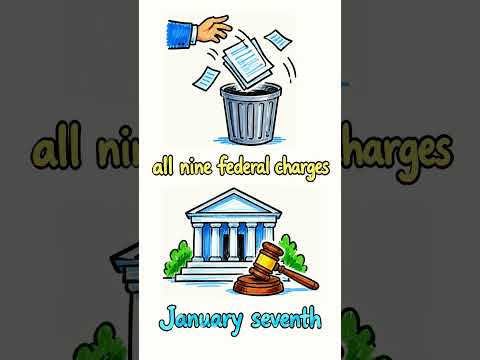 HIMSHims Just Asked A Federal Judge To Throw Out All Nine FTC Charges23 Oct · 42 views
What happened. On Wednesday 22 October 2026, Hims and Hers Health (NYSE: HIMS) filed a motion in the US District Court for the Northern District of California seeking to dismiss all nine counts of the Federal Trade Commission's 29 July 2026 complaint (filed jointly with Utah and Los Angeles County). The nine counts cover subscription billing conduct, cancellation friction, and sharing of health data with advertising platforms. Judge Vince Chhabria set the dismissal motion hearing for 7 January 2027. Sources: Bloomberg court filing summary; MLex court filing summary; Quiver 22 October coverage; California Northern District case docket.
Hims's four lines of defense. First, privacy: users confirmed the privacy policy at sign up, and that policy explicitly stated that personal information including sensitive information may be shared with marketing and advertising partners. Second, subscription law: historical fixed term contracts with instalment payments do not fall within the federal statutory definition of automatically renewing subscriptions. Third, disclosure: the checkout page stated periodic prescription fees (such as USD 147 every 90 days). Fourth, cancellation: cancellation was always available by phone, email and chat, with a full online cancellation path opening in April 2023. The company also argues the regulator has not established the basis for its proposed fine and injunction.
Why this is noteworthy. In Q2 2026, Hims recognised about USD 62.5 million in provisions related to the FTC matter. The company nevertheless chose a full public contest rather than a settlement. For a litigant that has already provisioned at that scale, choosing a motion to dismiss on all counts signals either strong confidence in winning on the merits or a view that the remedy on offer (particularly the injunction's scope) is unacceptable. The investor read is: if the FTC's primary remedy would restrict Hims's use of health data for advertising targeting, the customer acquisition cost hit is more consequential than the fine itself.
What this video does not claim. That Hims wins the motion: motion to dismiss standards are high, and the FTC has in GoodRx and BetterHelp successfully argued that general consent clauses in privacy policies do not cover health data sharing with advertising platforms. That the FTC risk goes away: the hearing is in January 2027, and the FTC uncertainty will span at least Q3 (reports 9 November) and Q4 earnings. The securities class action (lead plaintiff deadline 2 November 2026) is a parallel exposure not addressed by this motion.
Our wording, flagged. Sixty million dollars rounds Q2 2026 provisions of about USD 62.5 million. All nine federal charges refers to the nine counts in the FTC complaint. Settle refers to a negotiated consent order with the FTC rather than contested litigation. Would rather test the law than fold is our plain English for electing a motion to dismiss on all counts rather than settlement.
Sources: Bloomberg court filing summary, 22 October 2026; MLex court filing summary, 22 October 2026; Quiver report, 22 October 2026; US District Court for the Northern District of California docket; Stray Dog daily brief, 23 October 2026.
 TSLA3.1 Million Driverless Miles. Here Is How Many People Tesla's Robotaxis Injured23 Oct · 31 views
What happened. On Wednesday 21 October 2026, Tesla, Inc. (NASDAQ: TSLA) published its first Robotaxi safety report, a page on tesla.com. Ashok Elluswamy, Tesla's vice president of AI software, announced it on X at 11:58 Pacific time, before the US market close and hours before Tesla's third quarter results. It covers 22 January to 18 October 2026 and counts only miles driven with no safety monitor in the car: 3.1 million. Austin 2.118 million, Dallas 608,000, Houston 226,000, Orlando 61,000, Tampa 53,000, Miami 46,000. Of those miles, 862,000 were after dark and at least 113,000 in rain. Tesla reports zero people injured in collisions where a robotaxi made first contact, zero pedestrians or cyclists hit by a robotaxi, and zero deployments of a robotaxi's own airbags. Tesla estimates that human drivers would have had 9.1 injury collisions over the same miles. Elluswamy put the running total at 3.3 million miles on the day of the announcement.
How the counts work. Tesla's injury and pedestrian counts include only crashes where the robotaxi made first contact, and the injury count includes alleged as well as verified injuries from the crash reports Tesla files with NHTSA. The human estimate is built from Texas police reports for Austin, Dallas and Houston, which do not record first contact, so it counts every injury crash regardless of which car hit first. The two numbers are not counted the same way. Tesla reports its own counts; they are not independently audited.
Cybercab. Asked on the earnings call when Cybercab will be available for customers to buy or own, Lars Moravy said Tesla is trying to get Cybercabs to customers by the end of this year, 2026. He said all Cybercabs now go to Tesla's own Robotaxi fleet, and that Tesla will start small this year and scale as it learns how to deliver and manage autonomous cars in customers' hands. Elon Musk added that Cybercab is primarily going to be offered as transport as a service, and that the vast majority will be essentially Tesla owned. NHTSA opened an audit query (AQ26002) on 3 September 2026 into how Tesla certified the Cybercab, which has no steering wheel or pedals, as meeting federal safety standards. It is still open.
Next cities. Tesla's page lists Las Vegas, Jacksonville, Phoenix and San Antonio as coming soon. Tesla's second quarter update had already listed Phoenix and Las Vegas as preparations underway. No launch dates were given.
Risks from the same days. In the early hours of Thursday 22 October 2026, the California Highway Patrol says a Tesla on Interstate 80 in Vallejo struck and killed a 71 year old man crossing the freeway, and the driver stated the car was operating in Full Self Driving. Dashcam video showed the car braking and steering left, and at least one other vehicle struck the man afterwards. That car had a driver, so it is outside the Robotaxi report, which counts only miles with no safety monitor in the car. FSD (Supervised) requires a driver. On cash, Tesla's Form 10 Q shows capital spending recorded but not yet paid for at $3.67 billion on 30 September, up from $2.63 billion on 30 June and $1.63 billion a year earlier. Third quarter operating cash flow was $6.26 billion and net income $0.80 billion; Electrek attributes $2.59 billion of that cash flow to working capital. Reported free cash flow was $1.53 billion, and full year capital spending guidance above $20 billion leaves about $7 billion for the fourth quarter. On older cars, no one on the earnings call mentioned HW3. Electrek reports the HW3 upgrade question ranked fifth on the shareholder platform with 652,900 shares; investor relations read nine questions, including lower ranked ones.
Also from the call. CFO Vaibhav Taneja said Tesla has started building a factory in Austin that would be able to make a lot more Optimus robots. Musk said Tesla needs on the order of 10,000 or 20,000 Optimus robots doing self play, that a demo could come in a month or two, and that shipping Optimus to outside companies is about a year away. He said Tesla is hoping for EU wide approval of FSD and would be surprised if it takes longer than the first quarter. Elluswamy said Tesla is building its own maps.
What this video does not claim. That robotaxis are safer than human drivers: the two counts are made differently, as above. That nobody has been hurt in any crash involving a robotaxi: Tesla's page describes an SUV redirected into a robotaxi at a stop sign, after which an occupant of another vehicle was hospitalized, and Tesla did not count it because the robotaxi did not make first contact. Another vehicle's airbag deployed before it struck a robotaxi; Tesla counts only robotaxi airbags. That Tesla will sell Cybercabs this year: Moravy said Tesla is trying to, and NHTSA's audit is open. That the four cities have launch dates, or that the report caused them. That FSD (Supervised) drives a car by itself.
Our wording, flagged. Nobody is Tesla's zero for people injured by Robotaxi, which counts people injured in a collision where the robotaxi made first contact. Driverless means no safety monitor in the car, which is how Tesla counts these miles; remote operators can assist or take control. Hit first is Tesla's first contact. About nine rounds Tesla's 9.1 injury collisions (Elluswamy wrote roughly 9 injuries). The same miles is Tesla's phrase; its human estimate is built from Austin, Dallas and Houston, where most of the miles were driven. Next robotaxi cities is Tesla's coming soon list. Buyers is Moravy's customers, in his answer to a question about buying or owning a Cybercab. It starts small is Moravy's start small this year. Most will stay Tesla owned, selling rides is our plain wording of Musk's vast majority essentially Tesla owned, offered as transport as a service. Wednesday is 21 October, US time, dated from Elluswamy's post ID, not from the brief.
Sources: Tesla Robotaxi safety page on tesla.com, data as of 18 October 2026; Ashok Elluswamy on X, 21 October 2026; Tesla third quarter 2026 earnings call, 21 October 2026, transcript via Investing.com; Tesla Form 10 Q filings for the quarters ended 30 June and 30 September 2026 (SEC); Tesla second quarter 2026 update; Electrek, 22 October 2026; California Highway Patrol, as reported by ABC7, KRON4, ABC10 and SFist, 22 October 2026; NHTSA audit query AQ26002; Stray Dog daily brief, 23 October 2026.
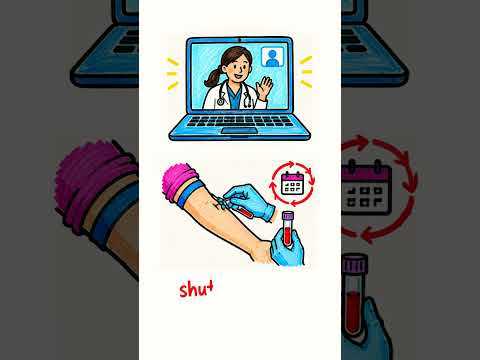 HIMSHims Just Launched The One Prescription It Can Only Sell With A Doctor In The Room22 Oct · 19 views
What happened. On Tuesday 21 October 2026, Hims and Hers Health (NYSE: HIMS) announced via Business Wire the largest expansion of its men's health franchise to date: three testosterone replacement therapy options added on top of its existing Testosterone Rx+ (enclomiphene, launched 2 May 2026, which stimulates endogenous production). The three new products directly supplement testosterone: a generic testosterone cypionate intramuscular injection taken once a week; a compounded subcutaneous testosterone injection taken twice a week; and an FDA approved oral option, Kyzatrex, taken daily. Sources: Hims newsroom release, FinancialContent, Stocktitan, Rallies.ai. Prior exclusive collaboration with Marius Pharmaceuticals on Kyzatrex was first disclosed in September 2025.
Why it matters. WIRED reported on 21 October that this is Hims's first controlled substance prescription offering. Testosterone has been a US controlled substance under the 1990 Anabolic Steroid Control Act. That classification requires an upfront physician video consultation and ongoing clinical monitoring, including periodic blood draws for total testosterone, free testosterone and related markers. Testosterone cannot be sold off a self reported questionnaire, which is how a large share of US telehealth prescriptions (including some GLP 1 and ED categories) are typically dispensed by smaller operators.
The company says its diagnostic funnel for TRT uses the FDA cleared Tasso at home blood collection device, combined with a HIMS lab panel of 22 biomarkers (total testosterone, free testosterone, lipids, glucose, and others) read by a licensed physician. Hims said at Q2 that testosterone is the fastest growing specialty outside weight loss, launched only three quarters ago; no revenue or user numbers for the TRT line specifically have been disclosed.
Moat vs cost. The controlled substance gating is both a moat and a cost. Moat: small telehealth brands without the lab, the licensed physician workflow and the compliance machinery cannot easily enter. Cost: higher per customer physician consult expense, a larger compliance surface area, and tighter dispensing controls. The release does not disclose state coverage (only not available in all states) or pricing. The compounded subcutaneous injection is not FDA approved and sits in the same regulatory risk bucket as compounded weight loss formulations, during an active FTC privacy complaint and securities class actions (lead plaintiff deadline 2 November, case originally filed 3 September). TRT also causes infertility and demands rigorous screening, so one brand level medical adverse event is a nontrivial risk.
Verification point. HIMS Q3 earnings land on Monday 9 November 2026. The investor read: watch for standalone testosterone or hormone subscriber disclosure, and whether multi product subscription share rises. SEC EDGAR shows no new company filings for Hims this week, with the latest Form 8 K still being the 7 October Chief Accounting Officer change.
Our wording, flagged. Nineteen ninety in the video refers to the 1990 Anabolic Steroid Control Act, which added testosterone to the US controlled substance list. A doctor has to be on video first is a plain English statement of the required physician consultation. A blood draw every few months after describes the clinical monitoring regime at a general level, not a Hims specific protocol. Users stay on it for life refers to the clinical reality that discontinuation of exogenous testosterone usually requires continued monitoring and often continued prescribing; this is a clinical pattern, not a company retention claim. Twenty two biomarkers refers to the HIMS lab panel named in the release.
Sources: Hims and Hers 21 October 2026 Business Wire release; WIRED 21 October 2026 reporting; FinancialContent 21 October 2026; Stocktitan 21 October 2026; Rallies.ai 21 October 2026; SEC EDGAR filings list (checked 22 October 2026); Stray Dog daily brief, 22 October 2026.
 PLTROne Palantir Customer Says It Beat The Frontier AI Labs In 2 Days22 Oct · 28 views
What happened. On Tuesday 21 October 2026, Palantir Technologies issued a Business Wire release naming five customers currently fine tuning their own models on AIP, Ontology and Foundry, using NVIDIA Nemotron open weight models as the base: L3Harris Technologies, McCarthy Building, NVIDIA, Tampa General Hospital, and Ondas Holdings via Regna AI (sources: Business Wire via Yahoo Finance and Stocktitan; Palantir Bullets).
L3Harris. The release quotes the Chief Transformation Officer: in a few days we were able to outperform the frontier labs in our test environment and cut costs by 95 percent. Frontier labs are not training their models with the relevant data for our industry. L3Harris has consolidated more than 30 ERP systems into the Palantir ontology, with hundreds of applications built on top, about 3.5 million data connections and more than 5,000 scheduled data streams. The company says it is next pairing its model with field mission systems such as the VAMPIRE anti drone kit.
The other four. NVIDIA uses AIP to manage wafer to deployment supply chain (announced September, detail now). McCarthy Building, one of the largest US private contractors, used more than 100,000 construction requests for information to train a model predicting cost and schedule impact; subcontract clause drafting now saves about 30,000 engineering hours per year. Tampa General Hospital, a Palantir customer since 2021, built an on prem fine tuned model for data exfiltration risk classification, with +7 percent performance and 22x lower latency. Ondas Holdings' Regna AI confirmed its platform is built on AIP (already reported on 13 October).
Why this matters, in plain terms. Palantir's commercial argument is that the model layer is being commoditized: open weight small models (Nemotron here) trained on a customer's own ontology data can beat frontier labs in vertical use cases. Value accrues to the data and orchestration layer, which is where AIP, Ontology and Foundry sit. This is the commercial read of CTO Shyam Sankar's 12 October line about swapping models anytime without disrupting operations.
What this release does not disclose. Contract values. Deal durations. Incremental revenue. The L3Harris 95 percent and under two days numbers are the customer's own test environment claim, not independent evaluation. L3Harris and Tampa General are existing customers adding use cases, not net new logos. Timing one week before the 2 November Palantir Q3 earnings makes this a marketing release; the real fundamental test is Q3 US commercial revenue growth, net dollar retention and customer count.
Separately, BBC reported on 21 October that several Google DeepMind researchers resigned over Pentagon contracts, naming the Maven Smart System (Palantir built, integrates multiple AI vendor models) used for target identification. Former Maven project lead Shanahan was quoted criticizing deployment speed overriding test and evaluation discipline. The backlash is on Google and does not touch Palantir revenue, but Maven becoming shorthand for military AI ethics controversy sits alongside the UK NHS and HSBC holdings review as a governance and reputation tail risk.
Our wording, flagged. Two days rounds the quote in a few days and the Palantir Bullets paraphrase in less than 48 hours to a round number. A twentieth of the cost rounds 95 percent lower. A hundred thousand construction tickets rounds the 100,000 plus RFIs figure. Palantir does not sell the model, it sells the layer the model runs on is our wording of the model neutral orchestration thesis; the release itself does not use the word layer.
Sources: Palantir Business Wire release, 21 October 2026 (via Yahoo Finance, Stocktitan, Marketchameleon); Palantir Bullets issue 198; BBC coverage of the Google DeepMind resignations, 21 October 2026; Stray Dog daily brief, 22 October 2026.
 TSLA3 In 4 North American Tesla Buyers Signed Up For Paid Self Driving22 Oct · 23 views
What happened. On Wednesday 21 October 2026, after the US market close, Tesla, Inc. (NASDAQ: TSLA) reported third quarter results. On the earnings call, CFO Vaibhav Taneja said more than 75 percent of Tesla's deliveries in North America in the quarter included a sign up for paid FSD (Supervised) at the time of delivery. Tesla's update calls that a rise of nearly 20 percentage points on the second quarter. FSD (Supervised) requires active driver supervision and does not make the car autonomous. Active FSD subscriptions, which by Tesla's definition include upfront purchases and exclude free trials, reached 1.74 million, up 67 percent from a year earlier, with about 260,000 added in the quarter, the most ever. Tesla says it believes FSD is driving demand in markets where it is available.
Credits and the car margin. Revenue from the regulatory credits Tesla sells to other carmakers fell to $113 million from $417 million a year earlier. Automotive gross margin excluding those credits rose to 18.1 percent, from 16.3 percent in the second quarter and 15.4 percent a year earlier. Taneja attributed the gain over the second quarter to a higher mix of deliveries in Asia Pacific. This is the margin on cars before operating costs. Tesla's operating margin fell to 2.6 percent from 5.8 percent a year earlier, as research and development spending rose 69 percent to $2.76 billion.
Demand and batteries. Tesla says it ended the quarter with the largest backlog for its passenger vehicles in four years, and that battery availability continued to be the limiting factor in increasing car volumes. Deliveries were 486,532, down about 2 percent from a year earlier. Tesla says it continues to increase production of its own 4680 cells, and it has shipped the first Megapacks built with LFP cells from its Nevada factory. On the call, Elon Musk said Tesla is almost sold out of Megapacks for 2027. Energy revenue fell 16 percent to $2.88 billion, which Tesla partly attributes to tariff related customer refunds.
Robotaxi. Ashok Elluswamy, Tesla's vice president of AI software, said Cybercab will launch in Dallas next month. Taneja said Cybercab is available only in Austin today and that Tesla plans to bring it to some other cities before the end of this year. Tesla's Robotaxi service already runs in Dallas with Model Y cars, so Dallas is the Cybercab's second city, not the service's. Elluswamy said Tesla expects some of the first customer cars to join the Robotaxi fleet around the second quarter of 2027, with its V15 software. Tesla's answer to NHTSA on Cybercab certification is due 30 October.
Spending and Optimus. Tesla cut its 2026 capital spending guidance to about $20 billion from $25 billion. It said it secured capacity to borrow up to $30 billion and does not plan to draw on it this calendar year. Cash and investments were $45.4 billion and free cash flow was $1.53 billion. Tesla says Optimus production began on its high volume line in Fremont. Musk said deliveries to outside customers are about a year away and that reaching 20,000 a week will take at least a year.
What this video does not claim. That Tesla's overall profit rose: operating margin and earnings fell. That FSD (Supervised) drives the car by itself. That the 10 million subscription milestone in Musk's 2025 award is near: at about 260,000 additions a quarter it is far away, and Tesla's proxy rates it not probable. That Cybercab has launched in Dallas: it is a plan stated on the call.
Our wording, flagged. Over three in four is Taneja's more than 75 percent. Just over half is our arithmetic: more than 75 percent after a rise of nearly 20 points puts the second quarter in the mid fifties. Three hundred million dollars is our arithmetic: $417 million minus $113 million is $304 million. Eighteen and fifteen round 18.1 and 15.4 percent. The most buyers waiting in four years is our plain wording of the largest passenger vehicle backlog in four years. Batteries, not buyers, are the limit is our plain wording of battery availability as the limiting factor. Making more of its own means more of Tesla's own 4680 cells. Next year's Megapacks means Musk's almost sold out for 2027. Its second city means the Cybercab's, after Austin.
Sources: Tesla third quarter 2026 update, filed with the SEC on 21 October 2026; Tesla third quarter 2026 earnings call, 21 October 2026, transcript via Investing.com; Tesla second quarter 2026 update, filed with the SEC; Electrek and TeslaNorth, 21 October 2026; Fox 4 Dallas on the Dallas Robotaxi launch; Stray Dog daily brief, 22 October 2026.
 HIMSHims just quietly opened a third country in 1 week21 Oct · 32 views
Hims officially launched in Germany on 20 October via forhims.de, starting with men's weight management. Online consultations, prescriptions decided by EU licensed physicians, with in person needs referred to the patient's own doctor. German statutory insurance generally does not reimburse weight loss drugs, so patients already pay out of pocket, a structural fit for Hims's cash pay subscription model. The launch rides on the 2025 Zava acquisition, which already operated in Germany, so Hims is grafting its brand and acquisition engine onto an existing compliance and physician network. No GLP 1 supplier or German pricing disclosed in the release; a Novo Nordisk partnership is rumored but unverified by the company. Branded drug reselling in Europe cannot replicate US compounded drug economics, which may dilute the Q2 gross margin of 64%. Watch Q3 earnings on 9 November for international revenue mix and management commentary on German CAC. Sources: Hims newsroom (20 October), Reuters (20 October).
 TSLATesla And SpaceX Are Now Studying A Merger21 Oct · 19 views
What happened. On Tuesday 20 October 2026, on SpaceX's third quarter earnings call, Elon Musk confirmed that the boards of Tesla, Inc. (NASDAQ: TSLA) and SpaceX have each formed a special committee of independent directors to study a possible merger of the two companies. Musk said that because he is a conflicted party, he cannot be in the committees' discussions. He said no terms have been agreed, that there is no guarantee they will be, and that treating a merger as a certainty would be overstating it. Asked whether a merger would be a good idea, he said yes. Neither company has named the committee members or released a proposal, and as of this brief no Tesla filing mentions the committees.
The vote. Musk said that on Tesla's side a merger would need a yes from 50 percent of all outstanding Tesla shares, not 50 percent of the shares that vote, and he called that quite a high hurdle. For comparison, Tesla's proxy, filed on Monday 19 October, says its 2025 management proposal to remove the supermajority voting requirements in its certificate of formation and bylaws won the support of about 39.4 percent of all outstanding shares and failed. That proxy sets the annual meeting for Thursday 3 December with three routine items (three directors, a nonbinding vote on 2025 executive pay, and the auditor) and no merger proposal, so the earliest a merger vote could come is a later meeting. Tesla's voluntary retail voting program does not apply to the 3 December meeting. Its all matters option votes an owner's shares with the board's recommendation unless the owner overrides it, and a narrower option leaves mergers and contested director elections to the owner.
What is not known. There are no terms, so nobody knows who would acquire whom, at what ratio, or whether the deal would count as a change of control. In a stock merger, Tesla owners would hold a smaller share of a bigger company that also holds SpaceX's rockets, satellites and AI business. Tesla's proxy says that in a change of control, Musk's 2025 award can be earned on market capitalization milestones alone, earned shares vest, and unearned shares are forfeited. Electrek reads this as the robotaxi, Optimus and self driving subscription milestones dropping out. Three of Tesla's nine directors have SpaceX ties: Elon Musk; his brother Kimbal Musk, a Tesla director who has served on SpaceX's board; and Ira Ehrenpreis, who joined SpaceX's board in February 2026 and is still classified by Tesla as independent. xAI, now part of SpaceX, paid Tesla about $430.1 million in 2025, mostly for Megapacks; a merger would turn those into sales inside one company.
Also in the proxy. Tesla says it began producing Cybercab at Gigafactory Texas this year, is building the first production lines for Optimus, and that FSD (Supervised) has passed 15 billion cumulative miles. Electrek reports that Tesla rates one of the 12 operating milestones in Musk's 2025 award as probable, 20 million cumulative deliveries, and rates the robotaxi, Optimus and self driving subscription milestones not probable, about $105.8 billion to $120.4 billion of unrecognized expense.
Timing. Tesla reports third quarter results after the US market close on Wednesday 21 October, Thursday morning in Singapore. The brief says to watch Cybercab production, the ratio of remote operators to vehicles, litigation reserves and China gross margin.
Our wording, flagged. Half is Musk's 50 percent of all outstanding shares. Not voting has the same effect as voting no is our reading of that rule: a share that does not vote adds nothing to the yes count, exactly like a no. Hold SpaceX's rockets, satellites and AI too assumes a stock merger, the form the brief describes: Tesla shareholders diluted into a combined company with rockets, satellites and AI. Owners would hold a smaller share of a bigger company, and no terms exist.
Sources: SpaceX third quarter earnings call, 20 October 2026, as reported by Fortune, Drive Tesla and Investing.com; Tesla 2026 proxy statement, filed with the SEC on 19 October 2026; Electrek, 19 October 2026; Stray Dog daily briefs, 21 October 2026.
 PLTRPalantir Just Became The Door Every Other Software Company Has To Walk Through20 Oct · 28 views
What happened. On Monday 19 October 2026, Palantir Technologies Inc. (NASDAQ: PLTR) and Knox Systems announced a partnership focused on customers with critical mission sets in FedRAMP and Impact Level 5 (IL5) environments. The release, carried on Business Wire at 06:59 AM EDT, says the goal is to accelerate the delivery of commercial software into US federal government environments.
Who Knox is. Knox describes itself as one of the largest Federal and Department of War managed clouds. It hosts more than 100 AI and enterprise software applications, including Adobe, Sierra and Armis. Knox delivers FedRAMP authorization in 90 days, which it calls the biggest bottleneck in government IT.
What Palantir is adding. Palantir Global Head of Business Development Kevin Kawasaki said Palantir has helped leading software companies deploy to the federal government on Palantir's accredited infrastructure, and that the partnership scales that model. Together, Palantir and Knox say they are giving commercial software innovators one clear route into the government.
Why it matters for a Palantir shareholder. Palantir has been positioning itself as the layer that other software companies deploy through to reach US federal buyers. The 9 October announcement of a Google Cloud Marketplace listing for Palantir, the 16 October Surf Air secondary distribution deal, and today's Knox partnership are three similar moves in eleven days. The common pattern is that Palantir sells the accredited base and other vendors sit on top. If the model works, Palantir earns from the deployments of other software, not only its own.
What this is not. The release does not disclose any contract value, revenue share, or committed customer count. It does not change Palantir's reported revenue. The 90 day authorization figure is Knox's own description of its service, not an independent benchmark.
Timing. Palantir reports third quarter 2026 results on Monday 2 November, after the US market close. The brief says to watch whether management calls out the FedRAMP partner ecosystem as a distinct growth line.
Numbers in this video. 90 days is Knox's figure. More than a year is the common FedRAMP timeline before the Knox fast lane. Over 100 software applications is Knox's figure.
Sources: Business Wire, 19 October 2026. Stray Dog daily brief, 20 October 2026. SRF, 19 October 2026, for the Switzerland note in this section.
 TSLATesla's Shanghai Factory Shipped 22.5% More Cars While Sales Inside China Fell20 Oct · 50 views
What happened. China Passenger Car Association (CPCA) figures for January to September 2026, reported by Drive Tesla and Benzinga on 9 October and by Electrek on 13 October, show that Tesla, Inc. (NASDAQ: TSLA) shipped 22.5 percent more cars from its Shanghai factory than in the same nine months of 2025. That wholesale figure counts cars sold inside China plus exports. Exports more than doubled, up 108 percent to 361,972 cars, already more than the factory exported in any full year, including 2023, 2024 and 2025. Exports are now almost 49 percent of what the factory ships, against under 29 percent a year earlier. All of the growth came from exports.
The China side. Inside China, Tesla sold 381,088 cars in the first nine months, 11.9 percent fewer than a year earlier and the lowest first nine months in at least four years. In the third quarter Tesla sold 142,133 cars inside China, down 16 percent. July was down 33 percent. September, at 64,837, was down 9.4 percent. China's whole new energy vehicle retail market fell 12.8 percent through September, after Beijing halved the purchase tax exemption on these cars from 1 January. In the third quarter the market fell about 10 percent and Tesla fell 16 percent, so Tesla lost share inside China in the quarter.
The risk. Beijing has announced it will lower the export tax rebate on electric cars next year, so exporting the cars China does not buy will cost Tesla more from 2027. On 14 October Tesla also paused new orders in Canada for the Shanghai built Model 3.
What this is not. These are CPCA wholesale and retail figures, not Tesla's own filings, and wholesale counts cars leaving the factory, not cars delivered to customers. Nothing here says Tesla's profit per car held up. Tesla reports third quarter results after the US market close on Wednesday 21 October. The brief says to watch whether China revenue and auto gross margin were hit by export freight and the coming rebate cut.
Numbers in this video. 22.5 percent, 11.9 percent, more than doubled (108 percent), 49 percent and 29 percent are CPCA figures as reported. Nearly half is our wording for 49 percent. Under a third is our wording for 29 percent. Three months left means October to December.
Sources: Electrek, 13 October 2026; Drive Tesla, 9 October 2026; Benzinga, 9 October 2026; all reporting CPCA data. Gasgoo, 11 January 2022 and 10 January 2023, for the earlier export years. Stray Dog daily brief, 20 October 2026.
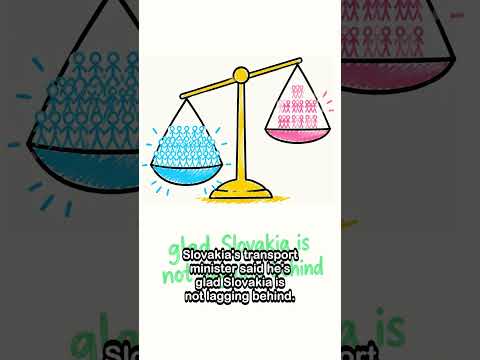 TSLATesla's Self Driving Is Now Approved For Nearly 1 In 7 People In The EU19 Oct · 31 views
What happened. On Friday 16 October 2026, Slovakia's Ministry of Transport officially recognised the provisional approval of Tesla's Full Self Driving (Supervised) that the Dutch vehicle authority RDW issued in April. Slovakia is the ninth EU country to approve it, after the Netherlands, Lithuania, Estonia, Denmark, Belgium, Slovenia, Czechia and Croatia. Together the nine are home to about 13.9 percent of the EU's population. The ministry says drivers on Slovak roads will be able to use the system, and it gave no start date. Slovakia's transport minister said he is glad that Slovakia is not lagging behind in modern transport technology, and that the driver stays fully responsible.
The rule. Approval across the whole EU needs a qualified majority in the EU's technical committee on motor vehicles: at least 15 countries representing at least 65 percent of the EU's population. The committee met on 6 October and did not vote. Its next chance is December. The nine approving countries are six countries and about 51 points of population short of that.
The problem. In July, France's transport minister said the system allows speeding, in some cases up to 50 percent over the limit, and questioned how well it keeps drivers attentive. France is about 15.2 percent of the EU's population and has not approved it.
What Tesla did. On 6 October, Germany's Federal Ministry of Transport said that in talks in September it and Tesla agreed the system may exceed the speed limit slightly, by at most 10 percent, and that Germany will support this approach in the European procedure. Germany's transport minister said he will now work for the system to be approved across Europe soon. Tesla has not publicly confirmed the change to the software. Germany has not approved the system for its own roads.
What that unlocks. Germany is about 18.6 percent of the EU's population, more than the nine approving countries together. Italy, about 13.1 percent, is still reviewing. Approval across the EU would cover every member state. Tesla sells the software to cars already on the road, so each approval opens sales to cars Tesla has already built. The brief calls European FSD subscriptions the most direct new software revenue for 2027.
What this is not. Approval across the EU has not happened, and the December meeting may not hold a vote. Approval is not availability: Slovakia has given no start date. Germany's support is support for a version capped at 10 percent over the limit, and it is not an approval.
Numbers in this video. Nearly one in seven, Germany having more people than all nine, and about seven times as many people are our arithmetic from the brief's population shares, not Tesla's or the EU's figures. 13.9 percent is just under one seventh, which is 14.3 percent. 18.6 percent is more than 13.9 percent. 100 divided by 13.9 is about 7.2. These are people living in those countries, not Tesla owners or subscribers.
Timing. Tesla reports third quarter results after the US market closes on Wednesday 21 October. The brief says to watch what Tesla says about Cybercab capacity and production pace.
Sources: Ministry of Transport of the Slovak Republic, 16 October 2026. German Federal Ministry of Transport, 6 October 2026. Electrek, 22 July, 9 October and 15 October 2026. Next, 7 September 2026. EV Update. FSD EU Tracker. Eurostat. Stray Dog daily brief, 19 October 2026.
 TSLATesla's Austin Robotaxis Are Now 6 Hours Short Of 24/718 Oct · 93 views
What happened. Tesla, Inc. (NASDAQ: TSLA) now runs its robotaxi service in Austin, Texas, from 6 a.m. to midnight, 18 hours a day. Riders were told on Friday night, 16 October, Austin time, and Not a Tesla App reported it on 17 October. It is the second one hour extension in about two weeks: in August the service ran from 6 a.m. to 10 p.m., and about two weeks ago it moved to 11 p.m.
The problem. Earlier this month, when rides moved to 11 p.m., Elon Musk wrote on X that the main thing Tesla is trying to solve is making sure its robotaxis do not run over pets that are hard to see at night: literally trying to avoid grey kittens on grey tarmac in the dark.
The unlock. In September, Tesla's vice president of AI, Ashok Elluswamy, answered a rider on X who wanted Cybercab rides all night: next month or so; the next tech to merge on the v15 plan will enable it. Not a Tesla App reports that a rollout of version 15 of Tesla's self driving software to the robotaxi fleet is targeted for this month. Tesla has not announced a date. Musk has said version 15 will be the large model, and Not a Tesla App puts it at about 10 billion parameters, ten times the current model's roughly 1 billion.
The court. On Friday 16 October the US Court of Appeals for the Ninth Circuit, in LoSavio v. Tesla, vacated the lower court's order that let California buyers of Tesla's Full Self Driving package sue as a class, and sent the case back for further proceedings. Tesla had appealed the order. The court held that the lower court was wrong to assume every buyer saw Tesla's statement about its cars' hardware for full self driving, because buyers did not have to visit the web page where it appeared in order to buy. The ruling is unpublished and is not precedent.
What this is not. Round the clock service has not started, and Tesla has not set a date for it. Midnight is not a first for Austin: the service also ran until midnight at its launch last year. The court did not decide whether Tesla's statement was misleading, and individual claims can continue.
Numbers in this video. Six hours short of round the clock, a third more hours, and two hours down with six to go are our arithmetic from the hours above, not Tesla's figures. 6 a.m. to midnight is 18 hours. A full day of 24 is six hours more, which is a third more than 18. At the start of October rides ended at 10 p.m., 8 hours short of a full day, and two of those hours were added this month. These are hours of service, not rides or revenue.
Timing. Tesla reports third quarter results after the US market closes on Wednesday 21 October.
Sources: Not a Tesla App, 17 October 2026 and September 2026. US Court of Appeals for the Ninth Circuit, memorandum filed 16 October 2026. Posts on X by the Tesla Robotaxi account, Elon Musk and Ashok Elluswamy, as embedded by Tesla North. Smart Cities Dive. Stray Dog daily brief, 18 October 2026.
 HIMSThe FDA Called BPC 157 Too Risky. A Plan To Allow It Just Reached The White House16 Oct · 29 views
What happened. On Thursday 15 October 2026, the US Department of Health and Human Services and the FDA sent an interim access policy for compounding using certain peptides to the White House budget office for review, according to a filing on the Office of Management and Budget website. The filing gives no details and names no peptides. The Associated Press, citing two people familiar with the plan, reported that it is meant to let compounding pharmacies temporarily make some of the most popular peptides, including BPC 157, by assuring them they will not be targeted, an approach called enforcement discretion. The FDA had placed BPC 157 and more than a dozen other injectable peptides on its list of substances too risky to be compounded by pharmacies, citing possible contamination, allergic reactions and tumor growth. In July, FDA advisers recommended dropping restrictions on six of the seven peptides put before them: BPC 157, TB 500, KPV, MOTS c, epitalon and Semax. FDA staff scientists had concluded that none had been studied enough to establish safety and effectiveness. Reuters reports that BPC 157 use is soaring without FDA approval.
What it means for Hims and Hers. On its second quarter call on Monday 10 August, chief executive Andrew Dudum said the company had started stability and validation testing at its Menlo Park facility on the raw ingredients for the six peptides the advisers backed, starting with BPC 157, and that it has committed to manufacturing those raw ingredients in the US. He said that if and when the FDA moves these peptides onto the list pharmacies may compound from while the FDA reviews them, the company can move extremely quickly. He also said the company's operating model is to wait for full and final FDA rulemaking before bringing them to market. Before the end of 2026, the company plans to offer peptides that are already allowed, such as sermorelin, glutathione and NAD+. Hims and Hers did not immediately respond to Reuters on Thursday.
What this is not. It is a submission for review, not an approval, and it has no start date. Enforcement discretion is temporary and can be withdrawn. It is not the formal rulemaking that would add these peptides to the FDA's compounding list, which could take months or years, and the AP reported it was not clear whether the administration still plans that rulemaking. None of these peptides is FDA approved, and most of the data on them comes from animal studies. Hims and Hers has not said whether it would sell them under an interim policy. Canaccord's estimate, as reported in June and July, is that the compounded peptide market excluding GLP 1 drugs could reach about 20 billion dollars within three to five years; other published estimates are far lower. The core question for owners has not changed: in the second quarter revenue grew 38 percent, gross margin fell to 64 percent and the company lost 86.3 million dollars.
Numbers in this video. The video has no numbers; one fifty seven is part of a peptide's name. No number in this video is our own arithmetic.
Timing. Hims and Hers reports third quarter results after the US market closes on Monday 9 November.
Sources: Reuters and the Associated Press, 15 October 2026, on the OMB filing. Hims and Hers second quarter 2026 earnings call, 10 August 2026. Hims and Hers second quarter 2026 results, filed with the SEC. Stray Dog daily brief, 16 October 2026.
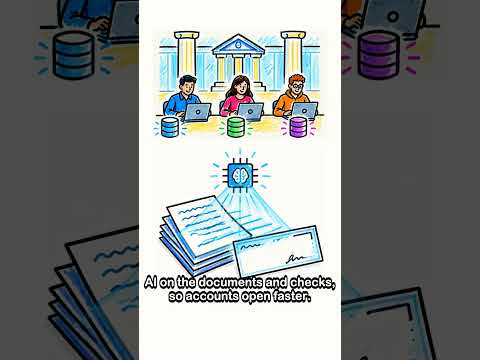 PLTRA Bank That Already Works With OpenAI Just Brought In Palantir16 Oct · 62 views
What happened. On Thursday 15 October 2026, Customers Bank, the bank owned by Customers Bancorp (NYSE: CUBI), announced a collaboration with Palantir Technologies (NASDAQ: PLTR). The bank will deploy Palantir's Foundry and AIP platforms to rebuild its deposit onboarding, which is how new clients open accounts; the release says reimagine. Palantir has embedded its own engineers alongside the bank's in house AI engineering and technology teams, building on the bank's own data and systems. The two will seek to use AI and automation to streamline document collection, entity verification and risk signal aggregation into a more connected, real time digital application. The release says client deposit accounts are up over 17 percent from a year earlier, and that the work is designed to sustain and scale that growth.
What the two sides said. Sam Sidhu, President and CEO of Customers Bancorp: You only get one chance to make a first impression, and for a growing number of our customers, that first impression is how fast and seamlessly we open their account. He called the collaboration the beginning of something bigger for Customers Bank, and another step toward becoming the AI native leader in banking. Elias Davis, Office of the CEO at Palantir: This is exactly the kind of use case our platform was built for. He said the goal is a client deposit onboarding and servicing experience that sets a new bar for the banking industry.
The OpenAI part. In April 2026, Customers Bank announced a multiyear strategic collaboration with OpenAI to bring AI into its lending, deposit and payment work, including AI for digital onboarding and account setup, with OpenAI's technical teams working on site. The relationship began in 2023 with ChatGPT Enterprise. The Palantir release does not mention OpenAI, and neither release says how the two fit together. This video says only that the bank already works with OpenAI and brought in Palantir too. It does not say Palantir replaced OpenAI, beat it, or runs on top of it.
What this is not. No contract value, no length and no revenue figure were disclosed. Customers Bank is a midsize bank, not one of the largest US banks. One bank is not yet a pattern: whether other banks follow is the thing to watch. Any revenue from this would show up in later Palantir reports, if it is broken out at all.
Numbers in this video. Seventeen percent is the bank's reported growth in client deposit accounts, over 17 percent from a year earlier. No number in this video is our own arithmetic.
Timing. Palantir reports third quarter results after the US market closes on Monday 2 November.
Sources: Customers Bancorp releases on Business Wire, 15 October 2026 (Palantir) and April 2026 (OpenAI). Palantir release on Business Wire setting its results date, October 2026. Stray Dog daily brief, 16 October 2026.
 PLTRLondon's Mayor Just Dropped His Fight With Palantir15 Oct · 39 views
On 14 October 2026 the Mayor's Office for Policing and Crime (Mopac) and Palantir issued a joint statement that both sides had withdrawn all allegations against each other, cancelling a High Court trial that had been scheduled for January 2027. The dispute began in May 2026 when Mayor Sadiq Khan's office blocked a proposed two year £50 million contract that would have let Scotland Yard use Palantir's Unified Operational Analytics system to process intelligence in criminal investigations. Palantir sued in June. The joint statement explicitly states Mopac's decision was not based on Palantir's values or ethics. Khan's own quoted statement praised Palantir as a leading software firm making a significant contribution to jobs and investment in London. Caveat: the £50 million contract itself has not been re awarded, so there is no revenue win from the settlement. This is a legal and reputational tail risk going away, not a sale. The settlement comes one month after Palantir hired former Labour deputy leader Tom Watson as a full time UK lobbyist. Sources: The Guardian 14 October 2026, Reuters 14 October 2026, ITV News London 14 October 2026.
 TSLANine Year Old Model S And X Were Stuck On Old Self Driving15 Oct · 239 views
What happened. On Tuesday 13 October 2026 at 7:08 pm Pacific (Wednesday 14 October, 10:08 am Singapore), Tesla's AI account on X, Tesla Super Intelligence (formerly Tesla AI), posted that FSD Supervised v14 Lite was rolling out to Intel Model S and Model X. The build is FSD (Supervised) v14.3 Lite in software update 2026.38.5.1. It goes to Model S and Model X built before the 2021 redesign that run Tesla's HW3 self driving computer and the Intel Atom infotainment computer, a group that includes 2017 cars. Until this update these cars had not received any v14 Lite build; Drive Tesla Canada says they had been on FSD v12 for nearly two years. At 6:35 pm Pacific, 33 minutes before Tesla's post, owner Leonard Campagna posted that it was installed on his wife's 2017 Model X.
What Tesla says it does. Tesla's v14 Lite release notes say it distilled the intelligence from HW4 V14 into HW3. The notes list better handling of merges, forks, pedestrians, traffic lights and cars cutting in, fewer false slowdowns, and smoother steering. Early owner feedback reported better speed control and less steering wheel nag. The same update carried FSD v14.3.12 to AI4 (HW4) cars.
What this is not. It is the Lite build. Reports say these Intel cars do not get Arrival Options, Start from Park, reversing on FSD or Actually Smart Summon, and Halloween Mode does not run on Intel cars. Tesla has said HW3 will not support unsupervised FSD or the coming FSD v15. It is supervised driving, and it goes out in waves, so not every eligible car has it yet. No new hardware went into this upgrade, but a 2017 car did not leave the factory with HW3. It runs this only because its self driving computer was replaced earlier: in March 2019 Musk said anyone who had bought FSD would get that computer free, and that it was the only change between HW2.5 and HW3.
Our arithmetic, disclosed. Nine year old, in the title, thumbnail, line 1 and line 9, is ours: from the 2017 model year to 2026 is nine years. The 33 minutes and both post times are ours too, decoded from the two posts' IDs on X.
Timing. Tesla reports Q3 2026 results after the market closes on Wednesday 21 October.
Sources: Stray Dog daily brief, 15 October 2026. Tesla Super Intelligence and Leonard Campagna posts on X, 13 October. Tesla Oracle, Not a Tesla App and Drive Tesla Canada, 14 October. Basenor, 13 and 14 October. Electrek, 18 June 2026 and 29 March 2019. Smart Analytics Global via RobotsBeat, 11 August. Startup Fortune, 14 October. Tesla's Q3 2026 production and deliveries release.
 TSLAIn Taiwan, AI Is Short Of Power, Not Chips. So Apollo Power Ordered Tesla Batteries14 Oct · 60 views
What happened. On 8 October 2026, Apollo Power (code 7911 on Taiwan's emerging stock board) signed a contract with Tesla's Taiwan energy business to buy 260 Tesla Megapack 2XL batteries, about 1 GWh of storage (about 501 MW, two hours of discharge). Apollo disclosed the purchase in a Taiwan Stock Exchange filing on 11 October. Apollo says the batteries are reserved for Taiwan's manufacturers, medical institutions, technology parks and AI data centers, for enterprise storage behind the meter and resilient grid projects: peak load management, backup power and power quality, not to replace grid supply.
Why. Apollo's chairman said companies spent years scrambling for GPUs, servers and talent, but once the computing goes live the first bottleneck is often power, and power now directly decides when AI data centers come online (his words were AI factories). He also said global supply of large storage equipment is tight, and that this was the main reason Apollo bought early. Tesla Taiwan's energy general manager said the two companies showed a demonstration site in June and reached 1 GWh four months later.
The price. Apollo's filing says the contract amount is covered by a confidentiality agreement and was not disclosed. The brief's figure of about US$265 million traces to a post on X and is not confirmed by Apollo or Tesla. The NT$13 billion (about US$406.7 million) reported in Taiwan is Apollo's total project investment, covering equipment and installation at customer sites, and Apollo's general manager put equipment at about 40 to 50 percent of it. Neither figure is Tesla's confirmed contract value, so neither is spoken.
What this is not. Delivery comes in three batches through the end of 2027, with operation planned for 2028, subject to delivery, construction, grid connection and the utility's acceptance. Apollo says the purchase is not revenue for Apollo, and that the alliance it launched the same day does not mean firm orders from its partners. Taiwanese reporting puts about 33 of the 260 units under formal customer contract, with about 150 more in negotiation. For Tesla this is a signed order, not delivered or recognised revenue, and one order of 260 units is small next to Tesla's total quarterly revenue (the brief's own caveat).
Our arithmetic, disclosed. Line 6, about a week of Tesla's worldwide battery deliveries, is ours. Tesla deployed 13.7 GWh of energy storage in Q3 2026, a quarter of 92 days, so about 1.04 GWh a week. Apollo's order is about 1.0 GWh: about 0.96 of a week at that pace, or about 7 percent of the quarter. It compares storage volume, not dollars.
Tesla's storage business, for context. Q3 2026 deployments of 13.7 GWh were the second highest quarter on record, behind 14.2 GWh in Q4 2025, and up 9.6 percent from 12.5 GWh a year earlier. They were also 14 percent below the 15.9 GWh analyst consensus Tesla compiled, and 1 percent above Q2's 13.5 GWh. In Q2 2026 storage carried a 20.4 percent gross margin against 16.3 percent for cars excluding regulatory credits, the highest of Tesla's segments, though down from 30.3 percent a year earlier (our arithmetic from Tesla's Q2 filing).
Timing. Tesla reports Q3 2026 results after the market closes on Wednesday 21 October.
Sources: Stray Dog daily brief, 14 October 2026. Apollo Power's Taiwan Stock Exchange filing, 11 October, as reported by TeslaNorth and Webull. MoneyDJ, Mirror Media, Cnyes and BigGo Finance, 8 October. TechNews, 10 October. Tesla's Q3 2026 production, deliveries and deployments release, 2 October. Tesla's Q1 2026 release. Tesla's Q2 2026 quarterly filing. Drive Tesla Canada, 2 October. Electrek, 13 October. CnEVPost.
 HIMSHims & Hers Lost $86M While Sales Grew 38%13 Oct · 51 views
What happened. This week Hims and Hers launched its women's brand, Hers, in Australia. The release went out on Monday 12 October in New York, which was Tuesday 13 October in Sydney. In Australia, Hers replaces Juniper, the women's health brand that has served patients there since 2021. Current Juniper patients keep the same care team and Australian practitioners. Hers in Australia covers hair regrowth, menopause and perimenopause, and weight management. Hair regrowth is the new category: the release says Hers is introducing new hair regrowth treatments, while Juniper already offered weight management and menopause care. The change covers Australia only. The release does not cover Juniper anywhere else. In August the company moved its Australian men's brand, Pilot, to the Hims name, so both of its brands now run in Australia. Dr Matt Vickers, Chief Medical Officer of Hims and Hers Australia, said women need care grounded in real evidence.
The deal. Hims and Hers bought Eucalyptus, the company behind Juniper and Pilot, earlier this year, in a deal valued at up to 1.15 billion US dollars. Part of that is paid later and part depends on financial targets, so 1.15 billion is the ceiling of the deal, not the amount paid so far.
The money question. In the second quarter of 2026, Hims and Hers grew revenue 38 percent from a year earlier, its gross margin fell to 64 percent, and it lost 86.3 million dollars. By the end of June it had set aside 62.5 million dollars for legal matters. Third quarter results come on Monday 9 November, after the US market closes. That quarter ended in September, before this launch, so it will not show Hers in Australia.
What this is not. A new name and a new treatment do not change the profit on each patient by themselves. No revenue for Hers in Australia has been reported. Whether it adds to sales shows up in later reports.
Numbers in this video. Eighty six million is the reported 86.3 million, rounded down. Thirty eight percent and up to 1.15 billion are as reported. No number in this video is our own arithmetic.
Sources: Hims and Hers releases on Business Wire: Hers launches in Australia (12 October 2026), third quarter 2026 results date (12 October 2026), Hims in Australia (August 2026), Eucalyptus acquisition completed (June 2026), agreement to acquire Eucalyptus (February 2026). Hims and Hers second quarter 2026 results and quarterly report, filed with the SEC. Stray Dog daily brief, 13 October 2026.
 PLTRWhat Happened To Palantir When The Pentagon Threw Anthropic Out12 Oct · 84 views
On Sunday, CBS News published the full transcript of Face the Nation's interview with Palantir chief technology officer Shyam Sankar. Margaret Brennan put it to him that the Pentagon has recently stopped using Anthropic's products, in a dispute over Anthropic's insistence on safeguards for military use of AI, and that Anthropic's Claude was part of Palantir's Maven platform. She asked how much impact the decision would have and who replaces Anthropic.
Sankar's answers, from the CBS transcript. First: the Department today has a wide range of model providers ... there's been no operational impact from that. Then: It's already been replaced, and users who are building AI applications get to pick the models that they're using. Asked once more about the impact: No impact. He tied it to Palantir's business: companies are realizing, and it equally applies to the government, that you're not going to pick any one model provider, and he said that has been powering the growth of Palantir's commercial business. His description of what an institution controls: which models to use in what context, the ability to switch models, and control of the weights themselves.
How it got here. In February, Anthropic refused to drop its limits on mass surveillance of Americans and on AI making final targeting decisions with no human involved. Defense Secretary Pete Hegseth directed that Anthropic be designated a supply chain risk and said its services to the Pentagon would continue for no more than six months. Earlier this month a Pentagon official told the BBC that the department has ceased the use of Anthropic products. Claude had been built into Maven, a data platform the Pentagon uses and Palantir operates.
What this does and does not show. No impact is Palantir's own account. The Pentagon has not described the switch in public. The six month window had run out before the Pentagon's statement, and sources told the BBC that Claude was still being used by the department for research, analysis and intelligence gathering. Reuters reported in March, citing one source, that Palantir would have to replace Claude with another AI model and rebuild parts of its software. Sankar did not say how long the switch took or what it cost. The link to commercial growth is his statement, with no figure attached. The commercial number comes with Palantir's next quarterly report.
Risks, stated straight. In the same interview Brennan raised the strike in Minab, Iran, that killed at least 123 schoolchildren, and Bloomberg's report that some personnel relied too much on the AI in Palantir's Maven system. Sankar said that reporting is inaccurate, that the likely cause is human error, and that the final report should be awaited. He said he does not know when it will be released. Today's brief also carries Palantir's continuing UK governance disputes, covered here on 10 and 11 October.
Numbers and dates. February and six months come from today's brief and match Hegseth's statement. Sunday is the day CBS published the interview. 123 comes from today's brief and from Brennan's question on air. No figure in this video is our own arithmetic.
Sources: CBS News, Face the Nation transcript, Shyam Sankar, 11 October 2026. CBS News, Melissa Quinn, February 2026. BBC, October 2026. Reuters, David Jeans and Mike Stone, 4 March 2026.
 TSLATesla Sold Fewer Cars Inside China Again12 Oct · 253 views
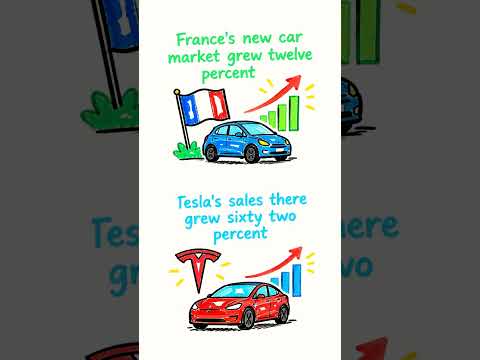
What happened in France. In September 2026 the Tesla Model Y was the best selling new car in France across every brand and every fuel, with 8,183 registrations in AAA Data figures (the brief gives about 8,100 to 9,000). Tesla brand registrations in France rose 61.9 percent from September 2025. The whole French new car market grew 11.6 percent, to about 156,600 cars, and battery electric cars took a record 41.7 percent of it.
What happened in China. Inside China, Tesla's sales were below the same month last year for a fourth straight month. September was down 9.4 percent, per CPCA data. That figure counts sales to buyers in China only. Cars that Tesla's Shanghai factory exported are not in it.
Our arithmetic, disclosed. Over one in twenty: 8,183 Model Ys out of about 156,640 new cars is 5.2 percent, roughly one in nineteen. On the brief's own range, 8,100 to 9,000 out of 156,600, it is 5.2 to 5.7 percent, so over one in twenty holds either way. The video also rounds 61.9 percent to sixty two, rounds 11.6 percent to twelve, and reads 41.7 percent as over four in ten.
What this is not. These are the brief's own caveats. France's whole market grew and electric cars hit a record, so part of Tesla's growth is the market moving to electric cars, not Tesla alone. Electric car demand in Europe leans on government incentives. This is one month in one country, and October has to show it again. The video does not claim Tesla grew faster than France's electric car market, and it does not claim France speaks for the rest of Europe.
Timing. Tesla reports third quarter 2026 results after the market closes on Wednesday 21 October.
Sources: Stray Dog daily brief, 12 October 2026. CPCA September data via CnEVPost, 9 October 2026. PFA and AAA Data September 2026 figures via Automobile Propre, 1 October 2026, and TeslaNorth, 5 October 2026. ContourGlobal release, 28 July 2026. PV Tech, 9 October 2026. Solar Power World, 8 October 2026. Tesla's third quarter 2026 production and deliveries release, 2 October 2026.
 TSLATesla's Cybercab Fleet Got 8X Bigger In 30 Days11 Oct · 56 views
The number first. On Saturday 10 October 2026 Tesla's official Robotaxi account posted: One month after launch, we've scaled to 300+ Cybercabs serving Austin, an 8x increase in 30 days. The post itself uses a dash before an 8x. It is replaced here with a comma so this file stays free of dashes. The words are unchanged. The spoken line says eight times bigger in thirty days, which is Tesla's own 8x in 30 days. No number in the video is our arithmetic.
Dallas. Replying to that post on the same day, Tesla's head of AI software, Ashok Elluswamy, wrote that the cabs are everywhere in Austin now, and then: Dallas soon. He gave no date. Tesla already runs Model Y robotaxis in Dallas, so a Cybercab launch there would join a Tesla service that already exists rather than start one. For now, Dallas riders still get the Model Y. Austin remains the only city where a Cybercab can be hailed.
What the count is, and what it is not. The 300+ is Tesla's own count of Cybercabs serving Austin. Tesla has not said how many of them run unsupervised and how many still carry a safety monitor. The brief cites a 23 September crowdsource count of 8 fully driverless units. That is a different unit from Tesla's fleet count, and the two should not be compared. It is also a different unit from the Texas registry count reported on 8 October, when plated Cybercabs went from 169 to 319 in one day. Plates count registrations. This post counts cars serving Austin. Waymo already operates in multiple cities, and Tesla's car with no steering wheel is still in one.
Second item. Also on 10 October, Elon Musk posted: Digital Optimus can play about halfway through the Diablo campaign so far just by looking at the screen like a human. Skill at Counter Strike and other fast games is good too. League is also in training. Goal is to generalize across all games. The game name is written without its hyphen here, for the same reason as above. He posted it in reply to a post on X about a new Tesla job listing for a Palo Alto machine learning engineer on the Digital Optimus gaming track. Digital Optimus is a software agent, not the humanoid robot. TeslaNorth describes it as the agent Tesla and SpaceXAI are building to use computers like a person, with Grok as the navigator and a Tesla built model handling the fast reactions, running mostly on Tesla's AI4 computer. On 11 March 2026 Electrek reported Musk confirming it as a joint xAI and Tesla project, part of Tesla's 2 billion dollar investment agreement with xAI. The brief describes it only as a Tesla agent reusing Full Self Driving networks. The video therefore attributes the claim to Musk and never calls Digital Optimus Tesla's alone.
What the game demo is not. It is a capability demonstration, not revenue. There is no customer, no booking and no product. Skill in a game is a separate gate from skill in the physical world. The brief's 26 September item says the physical Optimus still only does narrow supervised tasks and does not generalize, and Tesla guides external sales of the robot no earlier than the second half of 2027.
Specification numbers parked here rather than spoken. 300+ Cybercabs. 8x in 30 days. An Austin launch fleet of about 38, per Not a Tesla App, which is consistent with 300 divided by 8. That division is our arithmetic, and the figure is not spoken. A Dallas service area of 31 square miles centered on Downtown Dallas and an Austin Model Y service area of 246 square miles, both per Not a Tesla App, both not in the brief and not spoken. The brief says Dallas runs early FSD v15. Neither TeslaNorth nor Not a Tesla App confirms the version, so it is not spoken.
Caveats in one place.
1. The 300+ and the 8x are Tesla's own figures. No independent count matches them yet.
2. Tesla has not disclosed how many of the 300+ run without a safety monitor. The video never says driverless.
3. Dallas has no date. The video quotes the word soon and the CTA asks viewers to follow for the date.
4. Waymo operates in multiple cities. Tesla's Cybercab operates in one.
5. Digital Optimus is a joint project with Musk's AI company, inside Tesla's 2 billion dollar investment agreement with xAI. How its value splits between the two companies is not disclosed.
6. Digital Optimus is a demo. Physical Optimus generalization is unchanged by it.
Sources: Tesla Robotaxi account on X, 10 October 2026. Ashok Elluswamy on X, 10 October 2026. Elon Musk on X, 10 October 2026. TeslaNorth, 10 October 2026, on the Cybercab fleet and on Digital Optimus. Not a Tesla App, 10 October 2026. Electrek, 11 March 2026.
 TSLAGermany Opposed Tesla Self Driving. This Week It Switched Sides10 Oct · 51 views
Germany, Europe's biggest car market, had opposed EU wide approval of Tesla's supervised Full Self Driving. This week Germany's Federal Ministry of Transport switched position. It now supports approval across the whole EU, has called on the EU to speed the process up, and said the system performs strongly in city traffic. Its support comes with three conditions named in today's brief: the system may exceed the posted speed limit by no more than 10 percent, the driver stays fully liable while it is engaged, and the product is renamed Tesla Assisted Driving in Europe, which Tesla agreed to.
What it does and does not mean. EU wide approval needs 15 of the 27 member states. On 25 September 2026 only 7 supported it and the decision was pushed to December at the earliest. On 27 September Tesla began seeking approval country by country. France had also refused in July. Germany is the heaviest single supporter Tesla could add, but one country does not reach 15. This is support with conditions, not an approval. The product stays supervised, the driver stays fully liable, and the brief does not expect it to change anyone's decision to buy a car.
Cybercab in Texas. On Thursday 8 October 2026, 150 Cybercabs were added to the Texas automated vehicle registry in one day, taking the plated Cybercab count from 169 to 319. The full registered fleet is 739 vehicles, including 420 Model Y. Tesla's official X account posted the words Floodgates are opening over an image of four gold Cybercabs on the road. In Austin, third party trackers logged a record of about 868 Cybercab sightings in a single day and evening ride waits of about 8 minutes; on 23 September crowd tracking saw only 8 running at one point. Caveats: 319 counts plated vehicles, not driverless paid rides. 868 counts sightings, not paid rides, and it is a different unit from the 8 cars counted on 23 September. Service is still limited to an Austin geofence and stops at 11 pm. Waymo is further along, running in multiple cities.
Our arithmetic. Almost doubled is our arithmetic: 319 divided by 169 is about 1.89. The brief supplies 169, 319 and the 150 single day increase.
China, deliberately not in the video. CPCA data for September 2026: Shanghai factory wholesale of 95,366 vehicles, the highest month of 2026 and up 5 percent year on year, driven by exports of 30,529, up 58.3 percent. Domestic retail was 64,837, down 9.4 percent year on year, the fourth straight monthly decline, while Tesla ran a 7,000 yuan discount on remaining Model Y inventory and cut Model 3 prices by 5,000 yuan. The brief reads this as exports and discounts clearing inventory, not a recovery in Chinese demand. Tesla reports third quarter results on 21 October 2026, which will show whether the discounts cut into China pricing and margin.
Sources named in the brief: Stray Dog daily brief, 10 October 2026; German Federal Ministry of Transport statements; CPCA September 2026 data; Texas automated vehicle registry, 8 October 2026; Tesla's official X account.
 PLTR31 Newsrooms Signed Against Palantir10 Oct · 65 views
On 7 October 2026, US Immigration and Customs Enforcement posted a five page sole source justification on sam.gov. The document cancels the open competition that had been scheduled for July 2026 for the next phase of support on the Visa Security Program Tracking System, known as VSPTS, and migrates that system onto Palantir Foundry with no competition. To cover the handover period, the incumbent contractor Steampunk received a sole source award of approximately 1.65 million US dollars, structured as a twelve month base period plus one twelve month option, to maintain the existing system until the migration to Foundry is complete.
Why an owner should care. The brief frames this as another case in a pattern: a federal competition is cancelled, and the work is awarded to Palantir without a bid. The brief's wording is that the moat upgrades from winning bids to having bids skipped, because once the platform sits inside a mission critical workflow, the agency weighs the cost of ripping it out rather than the price of the next proposal. Note what the brief does not say. It gives no Palantir award value for VSPTS, and it puts no count on how many times this has now happened. The video therefore says "not the first" and never says "second".
Disclosed arithmetic. The brief gives a twelve month base period plus one twelve month option. Adding those two is my arithmetic and not the brief's: the funded handover window runs up to twenty four months. The brief gives no migration completion date. This number is kept out of the video.
The risk half of the same brief. Palantir Senior Vice President Tom Watson, Lord Watson of Wyre Forest, the former deputy leader of the UK Labour Party, gave evidence to the UK Parliament on the British government's work with Palantir. He said ministers could be in big trouble over the arrangements, and that mob rule must not decide which companies are awarded government contracts. Separately, Palantir's data contract with Gannett, the publisher of USA Today, drew a joint boycott letter signed by thirty one unionised newsrooms. The brief treats both as governance and reputation tail risk that has to be hedged outside the sovereign AI story, and it names the stack of immigration enforcement work, the ICE relationship and the Israeli military relationship as three politically exposed lines sitting on top of each other.
Caveats, in one place, so nothing above overstates the brief.
1. The video says the boycott letter is public and the bid was cancelled. It does not say the protest failed, was ignored, or cannot matter. The brief says the opposite. This is live tail risk and it is the thing to watch next.
2. The bid cancellation is dated 7 October. The boycott letter followed the 9 October reporting on the Gannett contract. Both land inside the same week, and the script never claims that one caused or defeated the other.
3. A sole source justification is a procurement decision, not a delivered system. The migration still has to be executed.
4. There is no Palantir dollar figure for VSPTS in the brief. The only dollar figure named, 1.65 million, is money paid to Steampunk, not to Palantir.
5. Watson's evidence is political testimony in the United Kingdom, not a lost US contract. The newsroom letter is a petition, not a cancelled contract.
6. Spec detail kept out of the video: the twelve plus twelve month structure, the VSPTS acronym, and the sam.gov posting location. The five page document length stays in, because the point of it is that five pages replaced a public competition.
Sources named in the brief: Signal Stray Dog daily brief dated 10 October 2026, the five page sole source justification posted on sam.gov on 7 October 2026, evidence given to the UK Parliament by Palantir Senior Vice President Tom Watson, and the joint letter signed by thirty one unionised newsrooms over the Gannett data contract.
 TSLAOne Federal Route Caps Cybercab At 2,500 A Year9 Oct · 9 views
The number first. The United States exemption route for vehicles that do not meet all Federal Motor Vehicle Safety Standards is capped at 2,500 vehicles a year. Tesla did not take that route for the Cybercab. Tesla self certified, meaning Tesla itself determined that parts of those standards do not apply to a vehicle with no steering wheel and no pedals. That determination is what keeps the Cybercab out of the 2,500 a year cap. On 3 September 2026 the US National Highway Traffic Safety Administration opened Special Order AQ26002 to examine exactly that determination.
The event. On 10 September 2026 NHTSA Chief Counsel Simshauser issued the Special Order, which is legally enforceable and requires Tesla's answers to carry a sworn executive affidavit. Tesla applied on 18 September 2026 to extend the response deadline by eight weeks, to 20 November 2026. The memorandum granting thirty days instead became public on 8 October 2026. The new deadline is 30 October 2026. One note on dating: the brief's evidence line calls this an 8 October public memorandum while its source line cites a 29 September memorandum. The video therefore says only that the decision came yesterday, which is the date the brief gives for it becoming public.
What this is not. The brief is explicit that the matter remains at the evidence gathering and review stage. It is not a recall. It is not a stop order. Existing Austin Robotaxi passenger service is unaffected. The real variable is whether, after Tesla's response, this escalates to a defect investigation, and whether it touches certification in expansion cities. The video never says Tesla has won this and never says the cap is beaten. Line 3 says nothing caps the route Tesla chose, which is the literal effect of self certification, and line 4 immediately gives the regulator the last word on it.
Optimus, and the screw count. On 8 October 2026 a Tesla patent application published covering a flexible tactile sensor layer that conforms to the curved surfaces of a robot's fingers, palm and thumb. Two flexible films carrying conductive patterns sit around a deformable spacer layer, in either a capacitive or a resistive configuration, with many independent sensing pixels per sheet. With enough pixels the system can judge contact position and object type. The application was filed on 11 September 2025. It follows a 26 September 2026 report from The Information that the Optimus hand currently needs more than one hundred screws, is assembled by hand, and that its touch sensors are unreliable. The screw count is in the video because it is the reason the hand cannot scale, not because it is a specification. A published application is not a shipped sensor. Hand assembly yield and AI generalisation are the two unproven gates to volume Optimus, and Tesla's own guidance for external commercial sale remains no earlier than the second half of 2027.
Cybercenter. On 7 October 2026 Tesla filed a United States trademark application for the name Cybercenter, covering electricity generation facilities, online data storage services and clean energy technology research. The basis is intent to use. There is no disclosed site, no capital figure and no timeline, and the brief states it contributes nothing to the current period. A matching application was lodged in Jamaica on 8 April 2026, a jurisdiction with no public search database, which is a known way to keep a name quiet, with the US application claiming priority inside the six month window. The name sits alongside the Terafab chip plant filing of 8 August 2026 at a quoted 16.8 billion dollars for phase one and the Crystal Sun solar cell plant filing of 16 August 2026 at a quoted 10.1 billion dollars. For scale on why generation and storage matter here, energy storage carried a 20.4 percent gross margin in the second quarter of 2026, the highest of any Tesla segment. That margin figure is deliberately not spoken, because storage margin already aired on 8 October.
Cut from the video on purpose. On 7 October 2026 it was confirmed that Ashish Kumar, previously the artificial intelligence lead on the Optimus programme, has co founded Intelligent Machines in San Francisco, building non humanoid industrial robots for manufacturing and aerospace work, targeting roughly 100 million dollars in funding. He is explicitly questioning whether a humanoid design is optimal for industrial work. It follows Milan Kovac, formerly head of the Optimus programme, taking a consulting role at Hyundai on 14 September 2026. This is the freshest item in the brief and the easiest emotional beat in it, and it was still cut. The brief's own risk note says the new company has zero effect on Tesla's current period, that humanoid and non humanoid approaches are not mutually exclusive, and that Tesla's position still rests on in house hardware, FSD reuse and owned manufacturing. A story about one engineer's career is not worth a line that a 2,500 a year volume cap could occupy.
Numbers disclosure. Every number in the video is the brief's own: 2,500, eight weeks, thirty days, over one hundred screws, the thirtieth, and the 2025 patent filing year. No arithmetic of ours appears in the video. The only phrasing of ours is the relative time in line 9, where last month is the 26 September 2026 report and 2025 is the 11 September 2025 filing date, both read against today's date. Also removed from the earlier version of this script: a 16.3 percent automotive gross margin comparison, which does not appear in today's brief and so is not used anywhere here.
Specification numbers, parked here rather than spoken: two film layers, one deformable spacer, capacitive or resistive readout, multiple independent pixels per sheet, 16.8 billion phase one, 10.1 billion, 20.4 percent, 100 million target raise.
Sources named in the brief: teslanorth and Electrek citing the NHTSA memorandum, Not a Tesla App and TeslaNorth on the tactile sensor patent, The Information, CryptoBriefing and GuruFocus on Ashish Kumar and Intelligent Machines, DriveTesla and Gerben Law on the Cybercenter trademark.
 PLTRPalantir Took 4.6 Million Shares Instead Of Cash This Week9 Oct · 51 views
Surf Air Mobility disclosed on 1 October 2026 that Palantir will receive 4,644,922 Surf Air shares for continued software access, with Surf Air also paying Palantir a percentage of revenue from flights managed through its OperatorOS product. The arrangement expands an earlier July 2026 partnership in which Palantir took a 7.4 percent stake in Surf Air Mobility and committed dedicated resources to the SurfOS artificial intelligence operating system for private aviation, built on Palantir's Foundry and Artificial Intelligence Platform. The spoken line uses "four point six million" and "seven percent" for the brief's and the filing's 4,644,922 shares and 7.4 percent stake. Both are the sources' figures and not our arithmetic.
The second item. Palantir announced on 4 June 2026, with ongoing activation flagged in today's brief, availability on Google Cloud Marketplace. The partnership includes two way integration between Palantir Foundry and Google BigQuery, deep connectivity between Google Gemini and Palantir's Artificial Intelligence Platform, and linking of Google's Knowledge Catalog with Palantir's Ontology. For a PLTR owner this is both channel upside and a long dated competitive risk. Channel upside is a new buying route through Google Cloud customer budgets, with Google acting as a lead source. The long dated risk is that Google itself, over several years, builds equivalent workflow orchestration natively on top of BigQuery and Gemini and attempts to compress what Palantir calls the central orchestration layer. The spoken line names only the fact that Gemini and Palantir now sit on the same shelf.
The third item, cash. The US National Center for Advancing Translational Sciences, a centre inside the National Institutes of Health, awarded Palantir a contract valued at approximately 36 million US dollars for support of the Secure Scientific Platforms Environment, extending government land and expand into life sciences research data infrastructure where security, compliance and air gap requirements fit the Ontology and governance layer.
Three further items for context, not in the video. The UK Department for Housing, Communities and Local Government has renewed its Homes for Ukraine refugee resettlement software contract with Palantir for one year at about 5 million pounds, roughly 6.6 million US dollars, which the Financial Times framed inside a wider UK debate about reliance on a single US technology company for major public programmes. Gannett, publisher of USA Today, is running on Palantir's platform, with its chief executive publicly describing the group as "actually an intelligence organisation now", a non traditional commercial case for the Artificial Intelligence Platform. And no new financial print today, with the consensus three year revenue growth rate of about 55 percent unchanged.
Caveats, in one place. Equity as payment turns part of today's recognised revenue into exposure to Surf Air Mobility's share price, which is a small listed name with its own volatility. Palantir does not publish a recurring revenue line, so the quality effect on top line growth is not possible to isolate from the outside. The Google partnership is both a short term distribution gain and a structural risk, and the structural risk only matters over multi year horizons. The NCATS award is a contract rather than realised revenue. The UK renewal is a one year extension, not a multi year lock in. No financial figures were restated today. All disclosed figures are company and government filings.
Sources named in the brief: Palantir official release on Google Cloud Marketplace, StockTitan on Surf Air Mobility 1 October 2026, Corporate Jet Investor 2 July 2026, NCATS and NIH announcement, Financial Times on UK Homes for Ukraine renewal, Gannett chief executive public remarks.
 TSLATesla And SpaceX Build The Chip Plant8 Oct · 72 views
On 7 October Elon Musk posted on X that Tesla and SpaceX will build and run the TeraFab chip plant in Grimes County, Texas. His words: "We will build and run the fab. Let there be ZERO doubt about that." That reversed the 6 October reporting that TSMC was joining as a partner, which Musk had himself acknowledged on 5 October. Per Musk, TSMC may rent part of the site and nothing more. Intel's chief executive confirmed in Tokyo the same day that Intel remains the sole foundry partner, supplying the 14A process on High NA EUV. Intel opened roughly 2 percent higher and the TSMC US listing fell about 1.3 percent on the reversal. TeraFab phase one is quoted at 16.8 billion dollars, with county filings showing 55 billion to 119 billion dollars across multiple phases. The silicon underpins Full Self Driving, Robotaxi, Optimus and xAI. The compute allocation is still roughly 25 percent Tesla Optimus and 75 percent SpaceX, unchanged.
Separately, during the California demand peak on 6 October, 85,774 Powerwall households sent 601 MW back to the grid and the full Powerwall fleet peaked at 634 MW, which the brief puts at roughly one large utility scale power plant. Storage carried a 20.4 percent gross margin in Q2 2026 against 16.3 percent for automotive, making it the highest gross margin business in the company. The virtual power plant extends a one time Powerwall hardware sale into recurring grid services and peak shaving revenue.
Rounding disclosed. The video says "eighty five thousand" for 85,774, "six hundred megawatts" for 601 MW, and "three quarters" for 75 percent. No number in the video is my own arithmetic.
Caveats. The TeraFab reversal is one X post with no signed agreement and no revised timeline. Earlier county filings describe TeraFab as a SpaceX led entity rather than a Tesla funded one, so Tesla's degree of supply lock in is genuinely unsettled. The Intel 14A yield is unproven. Four product lines compete for the same compute base and the split has not moved. The 634 MW figure is a single instantaneous peak, not sustained capacity, and the virtual power plant revenue share is still a rounding error against total revenue. The programme also depends on California electricity pricing and compensation rules. Also on 7 October, a Cybercab in Philadelphia lost an entire left door panel in a low speed collision, exposing internal structure. That is one incident, and the brief notes the panel may simply be modular for easy replacement, but it sits alongside earlier Robotaxi quality complaints.
Sources named in the brief: Musk on X 7 October, TeslaNorth, Pomegra, Reuters, Tesla official X 6 October, DriveTesla, 24/7 Wall St, @TeslaZoa on X 7 October, NotaTeslaApp.
 TSLADrone Footage Found 200 Cybercabs In Houston7 Oct · 54 views
Drone footage circulated on 6 October 2026 showing roughly 190 to 200 Cybercabs parked at Tesla's Houston Robotaxi lot. Some units were charging and some were already running on public roads for testing. The spoken line says "about two hundred", which rounds to the upper end of the brief's 190 to 200 range. That is the brief's own figure and not arithmetic of ours, but the range is disclosed here so you can see the exact number.
What this is and is not. Houston is widely pointed to as the most likely second city after Austin, but Tesla has not announced an expansion date and Houston remains a candidate. The cars counted are a staging and road testing population, not a driverless commercial fleet. This matters because Tesla's registered Cybercab count in Austin has run well above the number actually in service, and the same gap applies here. Two hundred cars in a lot is supply, not revenue.
Cybercab at Paris. Tesla has confirmed the Cybercab will appear at the Paris Motor Show opening on 12 October 2026. It is a static display only. Visitors cannot ride in it, and Tesla will run Full Self Driving test drives in a Model Y alongside the display. This is the first public appearance of Cybercab in Europe, following static tours in Japan, China, Australia and New Zealand. European regulators have not opened the road to a vehicle with no steering wheel and no pedals, so commercial deployment in Europe is far off. Paris is a shop window, and it is worth reading as one.
Powershare, the second item. Tesla Energy confirmed on 6 October that every Model 3 and Model Y ordered from 1 October 2026 onward ships with bidirectional charging hardware fitted at the factory. The home backup capability is sold as Powershare Home Backup, listed at about 1,970 US dollars, and it requires a Powerwall 3 and a Tesla Wall Connector. The car alone does not power a house. The hardware on board is the prerequisite, and the Powerwall 3 plus Wall Connector plus kit together cost several thousand US dollars more, so the real cost of entry is well above the headline 1,970. Owners whose cars were already built with the hardware can contact Tesla to activate it with no retrofit. The capability was previously limited to Cybertruck and to selected Model Y configurations announced on 20 September. Tesla publishes the runtime estimates: one Model Y adds roughly two days of backup to a Powerwall 3 at a 30 kWh per day household load with 90 percent state of charge, and one Cybertruck adds roughly three days.
Margin context, stated with its own caveat. Tesla's Q2 2026 energy generation and storage gross margin was 20.4 percent. Automotive gross margin was 16.3 percent. Any Powershare attach moves revenue toward the higher margin business. We left this out of the video for two reasons. It has aired on this channel twice in the last three weeks, and the brief says the near term effect on selling price and vehicle margin is close to nothing. Attach rates are not public. Treat Powershare as a vertical integration signal, not an earnings event.
Competitive honesty. Ford and General Motors both shipped home backup years before Tesla brought it to its volume cars. Tesla is closing a gap here, not opening one. Where Tesla differs is that the car, the inverter, the battery and the installer now all sit inside one brand.
Caveats in one place. Powershare applies only to new orders placed from 1 October 2026, so most existing Model 3 and Model Y owners are not covered. A Powerwall 3 is mandatory. Houston has no announced date. The Houston count is a staging and road test figure. Paris is static display only with no rides and no European regulatory path in place. Neither item in today's brief is a realisation grade event.
Sources: Electrek 6 October, The Verge 6 October, InsideEVs 6 October, Not a Tesla App 6 October, Bloomberg 6 October, Seeking Alpha 6 October, TipRanks 6 October, @SERobinsonJr on X 6 October.
 TSLAMusk Says The Robotaxi Cannot See A Gray Cat6 Oct · 74 views
On 4 October Musk said on X that Tesla's vision only Robotaxi still cannot reliably see low contrast objects at night, such as a gray cat lying on gray pavement. Tesla has pushed Robotaxi service out to 11pm and has publicly tied full 24 hour operation to FSD v15, which Tesla says ships this month. The chosen fix is a software release. Tesla is not adding lidar.
Caveats, stated plainly. Tesla software releases regularly slip. v15 solving low contrast night recognition is a claim, not a demonstrated capability. If night recognition is not solved, 24 hour operation does not unlock, and per vehicle earning hours and unit economics stay capped.
Also today. IMC Logistics ordered 50 Tesla Semis for California port drayage, 34 of them committed before the end of 2026, confirmed by IMC Pacific president Jim Gillis. IMC is one of the largest marine drayage operators in North America, a more credible customer than the earlier small orders. Caveat: 50 units is immaterial to deliveries and gross margin. Tesla's Q3 other models line fell to 8,295 units, and Tesla itself warns the roughly 300,000 dollar Semi ramp is slow.
Disclosure. No number in the video is derived. Every figure is stated in the source brief. No doubling or percentage claim was computed, because the brief gives no Robotaxi start time and the hours gained cannot be calculated honestly.
Sources: 2 October Culpium, 4 and 5 October Musk on X, Reuters, Teslarati, Gadgets360, Trucking Dive, Transport Topics, Jim Gillis on X.
 TSLATesla's India Sales Just Quadrupled5 Oct · 70 views
India's Vahan retail registration data for September 2026, reported by Autocar Professional on 3 and 4 October 2026, shows Tesla registered roughly 280 to 290 cars in India in September, every one of them a Model Y. That is up about 138 percent from roughly 117 cars in August 2026, and up about 304 percent from 69 cars in September 2025, which the brief describes as a quadrupling. June 2026 was 38 cars, and the brief records three consecutive monthly increases beginning in July. Cumulative Tesla registrations in India since market entry in September 2025 have passed 1,017 units. The September figure of about 290 took Tesla past Mercedes Benz for the first time, into second place in India's luxury electric passenger car market. India's total electric passenger car registrations set a record of about 36,000 units in September 2026, up roughly 93 percent year over year, and the brief states that Tesla's share and its absolute volume both rose inside that faster growing market. The brief attributes the increase to Shanghai built Model Y supply arriving in India plus the September store expansion into Chennai and Noida, and states explicitly that it was not driven by price cuts.
 TSLATesla Delivered 486,532 Cars Last Quarter3 Oct · 71 views
Tesla reported third quarter 2026 production and delivery figures on 2 October 2026. Deliveries were 486,532 vehicles, down 2.1 percent against the year ago quarter, which was an all time quarterly high. Production was 464,391 vehicles, of which Model 3 and Model Y accounted for 457,387. Deliveries exceeded production by about 22,141 units. Energy storage deployment was 13.7 gigawatt hours, the second highest quarter in company history, up 9.6 percent against 12.5 gigawatt hours a year ago and up 1.5 percent against 13.5 gigawatt hours in the second quarter of 2026. Storage gross margin was about 20.4 percent in the second quarter of 2026 against automotive gross margin of about 16.3 percent, which makes storage the highest margin segment in the business. The federal 7,500 dollar electric vehicle tax credit expired on 30 September 2026. Third quarter earnings are on 21 October 2026, 4:30pm US Central, livestreamed on X.
 TSLATesla Refused To Cut Its China Price2 Oct · 45 views
Tesla confirmed on 1 October that Model 3 and Model Y cars built at Giga Shanghai receive a run of upgrades starting in the fourth quarter. The Model 3 centre screen goes from 15.4 inch to a 16 inch high refresh display, matching the global Model Y. Both cars gain Vehicle to Load output of up to 2.2 kilowatts, letting the car power outside equipment through an adapter sold separately for 599 yuan. A new Zen Gray light interior with a black headliner and 19 inch Dark Nova wheels are added. Prices are unchanged. The upgrade reaches China and other markets supplied by Shanghai, including Australia, New Zealand and South Korea. The United States and Europe are excluded. Context: Tesla's China domestic retail sales have fallen three months running, with August down 12.4 percent year on year, while Shanghai exports fell 45.5 percent year on year as BYD leads the export category, and BYD and Geely press Tesla in the lower and middle price bands at home. Caveats stated plainly. Adding equipment at an unchanged price is a defensive move, not a margin story. The brief is explicit that the lift to average selling price and gross margin is limited, that whether it stops the sales decline is a fourth quarter question, and that this protects China specifically rather than being a global upgrade. Sources: Electrek, Carscoops, autoevolution and paultan.org, all 1 October 2026.
 TSLAMusk Just Cut Tesla's Chip Memory In Half2 Oct · 91 views
On 1 October Elon Musk said Tesla is cutting memory on its AI5 chip from 144 gigabytes to 72 gigabytes, and on the following AI6 chip from 216 gigabytes to 144 gigabytes. His stated reason is that memory supply, not chip design, is the real ceiling on Optimus humanoid robot production. Because memory supply is the binding constraint, halving the memory in each chip means the same supply yields roughly twice as many chips, at a lower cost per chip. The same AI5 chip is intended to serve three product lines: Full Self Driving, the Robotaxi and Optimus. The Cybercab near term still runs the older AI4.5. Caveats stated plainly. Musk's claim that the effect on Optimus performance is negligible is his own, with no independent testing published. AI5 volume production has already slipped to the middle of 2027, and changing the specification now moves the hardware roadmap again. The doubling is the arithmetic of halving a fixed supply, not a figure Tesla published. Sources: Newsquawk, Electrek, 24/7 Wall St. and Sawyer Merritt, all 1 October 2026.
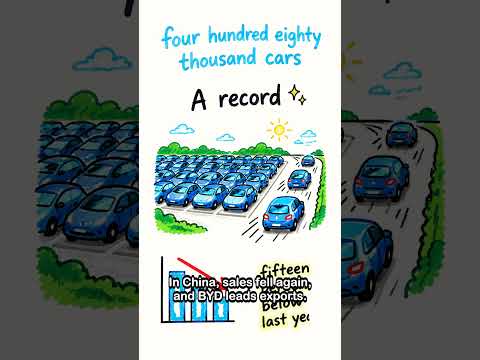 TSLATesla's Last Quarter With The 7,500 Credit Lands Tomorrow1 Oct · 20 views
Tesla publishes third quarter 2026 global deliveries and energy storage deployment on October 2. The federal 7,500 dollar electric vehicle credit expired on September 30, so this is the last quarter that carried it. Tesla's second quarter was a record 480,126 vehicles, reached with promotions and by drawing down vehicles already built. July channel checks pointed to roughly 15 percent below the same month last year. In China, domestic sales have fallen for consecutive months and BYD leads on exports. Caveats stated plainly. The 15 percent figure is a third party channel estimate, not a Tesla disclosure. A strong third quarter number is not proof of underlying demand, because buyers had an incentive to close before September 30, and the pull forward only becomes visible in the fourth quarter once the credit is gone. Sources: multiple reports 29 to 30 September 2026 as recorded in the daily brief.
 TSLAThe SEC Just Let Tesla Vote Your Shares For You30 Sep · 20 views
SEC staff issued a no action letter on 29 September 2026 in response to a request from Tesla, Inc., allowing Tesla to offer retail shareholders an Issuer Voluntary Retail Voting Program. The request was submitted by Tesla's general counsel on 29 September 2026 and cleared the same day. The mechanism: a retail holder opts in once to a standing instruction under which their shares are voted at future annual and special meetings in line with the board's recommendation, and the instruction stands until the holder cancels it. Source: Electrek 29 September 2026, citing the SEC no action letter.
 TSLATesla Locked In 30 Billion And Will Not Spend It30 Sep · 26 views
Tesla filed with the SEC on 29 September 2026 disclosing three new credit facilities totalling $30 billion: a $20 billion three year delayed draw term loan led by Citi, an $8 billion five year revolving credit facility led by Wells Fargo, and a $2 billion 364 day revolving credit facility. Tesla stated it does not intend to draw on any of the facilities in 2026. Sources: SEC filing 29 September 2026, Reuters, TechCrunch, Electrek.
 TSLATesla's New Family Six Seater Is Sold Out Into 202729 Sep · 55 views
Tesla's Model Y L, the long wheelbase six seat three row family variant of the Model Y, is showing sold out on Tesla's own order page, with delivery estimates for new orders pushed into 2027, per Yahoo and multiple reports on 28 and 29 September 2026. Tesla reports third quarter 2026 delivery numbers on Friday 2 October, and the Model Y L order backlog is one of the things that release will test.
 TSLACzech Republic Approved Tesla Full Self Driving27 Sep · 38 views
This week the Czech Republic became the seventh European market to approve Tesla Full Self Driving Supervised. With the European Union wide vote pushed back, Tesla has shifted to bilateral approvals and officially confirmed it is working with Irish authorities. Ireland has more than 15,000 cumulative Tesla vehicles delivered and over 2,729 new registrations in 2026, with a new retail centre opening in North Dublin. One caveat stated plainly: on the evidence so far, country by country approvals have not produced a visible lift in local sales, so the revenue quality of each approval is unproven. Sources: Irish Examiner and NotaTeslaApp, September 26, 2026, as recorded in the daily brief.
 TSLA126 Tesla Cybercabs Registered. 8 Actually Running27 Sep · 41 views
Texas motor vehicle records to September 26, 2026 list 546 self driving passenger vehicles registered in the state: 420 Model Y Robotaxi and 126 dedicated Cybercab. The Cybercab count stood at roughly 69 on September 22, so the dedicated Cybercab total nearly doubled in four days. A community tracker of the Austin robotaxi service counted approximately eight Cybercabs actively running on September 23. Two caveats stated plainly: registering a vehicle is a state paperwork step and is not proof that the vehicle is carrying passengers without a supervisor, and both Cybercab and Model Y Robotaxi operation remains heavily geofenced. Texas registration counts and real operating counts have diverged for a long time. Source: Tesla Oracle, September 26, 2026, as recorded in the daily brief.
 HIMSHims Put An AI Between Its Patients And Their Doctor25 Sep · 88 views
On 24 September 2026 Hims & Hers announced that its AI native clinical operating system, previously running only in Labs AI and the Hers ecosystem, is now live for Hims weight loss members. The company describes it as a closed loop action engine that replaces the traditional asynchronous text and photo consult.
 TSLATesla Just Made The Most Expensive Part Of Its Own Battery25 Sep · 192 views
On 23 September 2026, the first production Cybercab built with Tesla's own cathode powder rolled off the line at Giga Texas. The powder is produced in Austin and feeds Tesla's in house 4680 cells, which means two of the highest cost steps in a battery now sit inside the same company, in the same state.
 TSLATesla Switched On Grok Bot. Your Car Now Orders Dinner24 Sep · 75 views
On 23 September 2026 Tesla announced via its official X account that Grok Bot is now integrated into its vehicles. Per Not a Tesla App and EVSHIFT, drivers can use voice to check email, manage their calendar, place online orders and have Grok Bot recap existing conversations and tasks, all hands free while the vehicle is in motion. The shift is that in car AI moves from answering questions and controlling the vehicle to executing tasks on accounts that sit outside the car, which is why the brief treats it as a narrative increment on the same platform line as FSD and Optimus, and as something that raises the cost of switching to another brand.
 TSLAThe Last Ratings Agency Said Yes. Every Carmaker Said No23 Sep · 28 views
Two items from the 23 September 2026 brief.
 TSLATesla Wants $50,000 Wired Before It Shows You The Car21 Sep · 41 views
Two items, 18 to 21 September 2026.
 TSLATesla Kept The Better Software For Its Own Fleet20 Sep · 89 views
Three items, 19 to 20 September 2026.
 TSLATesla Put The Cybercab In A State That Has Not Approved It19 Sep · 65 views
Two placement items, 19 September 2026.